Many of the Valley's neighborhood irrigation systems are 60 to 80 years old, and they're failing faster than neighbors can pass the hat. An IWDD is how a neighborhood shares the cost of keeping the water flowing.
An Irrigation Water Delivery District (IWDD) is a Maricopa County special taxing district made up of the property owners in a flood irrigated neighborhood. It collects a small annual amount with your property taxes and uses it for one job: maintaining and repairing the neighborhood's private irrigation system.
SRP delivers water to the delivery gate at the high point of your neighborhood. From that gate on, every pipe, gate, and ditch is private. Each owner is responsible for the valve on their own lot, and the shared lines between the gate and the homes belong to the neighborhood together.
An IWDD is formed through Maricopa County, not SRP, and it's run by three volunteer trustees elected from the neighborhood. It is not an HOA: it has no say over your house or yard. It only keeps the water moving.
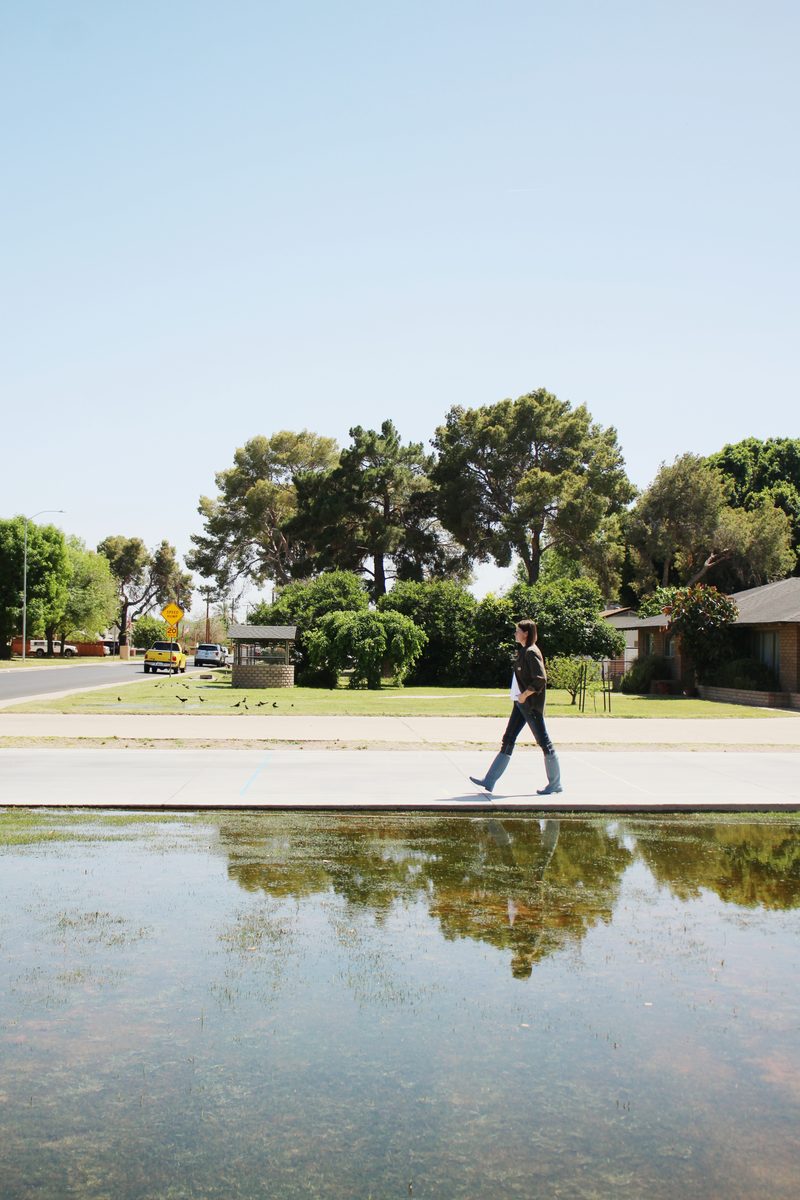
When these systems were built, there was no construction standard, and many of them are now 60, 70, even 80 years old. At the 2026 NCPHA Heat & Water Symposium, SRP's Stephen Peterson said SRP is seeing a huge spike in private system failures.
The old fix was one or two neighbors going door to door collecting money. That's getting harder. One North Central Phoenix resident at the 2026 Heat & Water Symposium described fixing one leak only to uncover the next, wrangling neighbors to chip in a hundred or two every couple of months, and finally starting a GoFundMe to keep the system running. Some owners who don't use the water don't think the shared line is their problem at all (and they couldn't be more wrong).
And the bills can be big. A break in a shared line under the street can require a bond and a licensed plumber, and repairs can run into the tens of thousands of dollars. Without a reserve, a single break can leave a whole neighborhood dry for weeks.
The district builds a reserve in an account with the Maricopa County Treasury, so repairs get paid for right away instead of waiting on donations.
The cost is split evenly by acreage across every property in the district, including owners who stopped irrigating (but still benefit from the trees and grass in the neighbors' yards who do).
It's collected with your property taxes. Nobody has to knock on doors or track who has paid.
Flood irrigated homes are becoming more valuable. A well-maintained, funded system protects that value for every owner.
It takes money out of neighbor-to-neighbor arguments, and the annual meeting gives everyone a reason to get together.
Costs vary by district, but SRP says the average it sees is about $95 a year for a quarter-acre property. That works out to roughly $7 or $8 a month to protect the system your yard, trees, and home value depend on.
The amount is calculated per acre. If a one-acre property pays $100, a half-acre property pays $50. Every year, the trustees submit a budget to Maricopa County, and if the current amount is working, the district can simply keep it.
This is separate from your regular SRP irrigation bill, which is a modest annual charge based on lot size. In districts like Rancho Solano, the SRP fee is also collected with property taxes, so nobody misses a delivery because a neighbor forgot to pay.
What Flood Irrigation Costs"If we were to break that down monthly, we're talking about $7 or $8 a month to protect your irrigation system."Stephen Peterson, Field Service Liaison, SRP
*Average cited by SRP at the October 2026 NCPHA Heat & Water Symposium. Your district's actual cost depends on the condition of your system and the budget your trustees set.
The process is involved, but you don't do it alone. SRP has a team dedicated to walking neighborhoods through it with Maricopa County.
Find out who's interested and who's frustrated with the current system. A few committed neighbors willing to organize (and maybe serve as trustees) makes everything easier. (Not sure if your property qualifies for flood irrigation? Shoot me an email and we can look into it together!)
Call (602) 236-3333 and ask for an IWDD specialist, or email iwdd@srpnet.com. Through its Assisted Irrigation Delivery District program, SRP usually starts with a neighborhood meeting to gauge interest and answer questions.
SRP reviews the condition of your existing system and helps you map the district's boundaries and the water system it will cover.
SRP helps prepare the impact statement, request for resolution, and petition to Maricopa County. Maricopa County requires the petition to be signed by a majority of the owners of acreage within the proposed district. SRP's $1,500 rebate helps cover formation fees.
The Maricopa County Board of Supervisors reviews and approves the district. SRP attends the hearings and serves as your liaison.
Three homeowners serve as elected volunteer trustees for two-year terms. They submit the annual budget, identify problems, hire the contractor the district chooses, and make sure repairs happen so nobody misses a delivery.
Need a contractor? See the contractors I trust →
Rancho Solano, in North Central Phoenix, put its own irrigation district in place when the neighborhood was platted. At the symposium, resident Scott Mardian explained what that looks like day to day.
The SRP water fee is collected annually with property taxes, so deliveries never stop because someone forgot to pay. The district can build a reserve sized to the condition of its lines. And because the district keeps everyone's contact information, it does more than fix pipes: an annual potluck meeting plus three more neighborhood parties a year.
Compare that with neighborhoods that have no district, where the same few people end up organizing, collecting, and paying for every repair.
North Central Phoenix GuideScott Mardian on the Rancho Solano Irrigation District (4 min)
Stephen Peterson, Field Service Liaison with SRP, at the October 2026 NCPHA Heat & Water Symposium.
This page is general and educational, not legal or tax advice. Program details, costs, and county requirements can change. Confirm current details with SRP and Maricopa County before starting.
How the water travels from mountain snowmelt to your backyard, and what a delivery day looks like.
Read the guide →
Why SRP water rights are among the most secure in the state, and what to verify before you buy.
Read the guide →
Who to call for repairs, running your water, parts, and custom fabrication.
See the list →