The fair answer isn't yes or no — it's "it depends on how you use it." Here's my honest, both-sides version.
This is the question I get most, and I get it: it was the same question I asked myself once I started studying the impacts of the flood irrigation system in the Phoenix area. Flooding a yard in the middle of the Sonoran Desert sounds wasteful. But the full picture is more nuanced than the kneejerk reaction.
Yes — flood irrigation uses more water per delivery than a drip system. That part is true. But it applies that water deeply and infrequently, and a significant portion soaks past the surface into the soil profile and aquifer instead of evaporating off spray heads. The water isn't simply "gone."
And what that water produces matters. Deep-rooted shade trees, cooler neighborhoods, and locally grown food are important and valuable. When used to grow food and shade rather than a decorative lawn, flood irrigation is arguably one of the most productive uses of that water in the Valley.
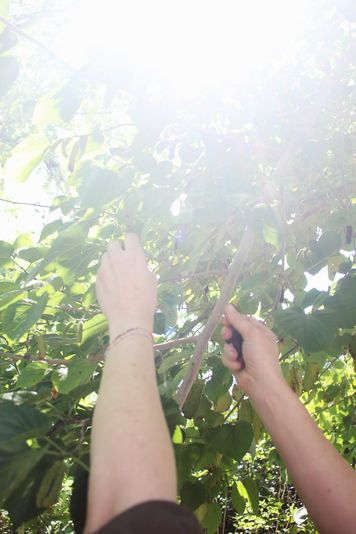
No spin. Here's the case on each side so you can decide for yourself.
Flood irrigation uses more water per event than drip. In a decades-long drought, any large water use in the desert deserves scrutiny. If it's used to keep a sterile grass lawn green, that's a much weaker justification than growing food or shade. And infrastructure that leaks or is poorly maintained can waste water needlessly.
Much of the water recharges groundwater rather than evaporating. The tree canopy it sustains cools neighborhoods and cuts urban heat. Most Greater Phoenix flood irrigation draws from Salt and Verde River water — not the stressed Colorado River. And growing fruit locally avoids the water and fuel embedded in food shipped across the country.
A meaningful share of flood water percolates down into the soil and aquifer rather than evaporating off the surface the way sprinkler spray does.
The mature canopy flood irrigation sustains shades homes and streets, measurably reducing the urban heat island in one of America's hottest cities.
Most Greater Phoenix flood irrigation comes from the Salt and Verde watersheds, so it doesn't draw down the most stressed river in the Southwest.
Fruit grown in your own yard skips the water, fuel, and packaging embedded in produce shipped thousands of miles to a grocery shelf.
How the water travels from mountain snowmelt to your backyard, and what a delivery day looks like.
Read the guide →
Roughly $75–$200 a year — and why it's billed annually, not monthly.
Read the guide →
What appurtenant water rights mean and exactly what to verify before you buy.
Read the guide →