Late 1800s Shaped by W. J. Murphy
~2,500 Residential parcels (NCPHA area)
2 Landmarks on the State & National Registers
$0 Required HOA fees (NCPHA is voluntary)
The Story

The trees came first — and so did the water.

North Central Phoenix exists the way it does because of one person's vision and the water he was willing to move to make it real. In the late 1800s, developer William J. Murphy laid out this stretch north of downtown, planted it heavily with trees, and extended irrigation to keep them alive in the desert. The canopy you drive under today is the grown-up version of those plantings.

Murphy's own home still stands west of Central Avenue on Orangewood, a quiet reminder that the grand corridor started as farmland and orchard ground. The olive trees that line Central and the bridle path that runs beside them both carry his name and his intent: a green, walkable spine through what was otherwise open desert.

That is the thing to understand about North Central. The famous trees are not decoration that happened to survive. They are the whole point — and they are standing because, for well over a century, water has been brought to their roots.

Faces of Flood — North Central Phoenix

Your photo here.

Community photos of North Central Phoenix go here. None featured yet — submit one (no people, please) and you could be the first.

Submit a Photo
The Water

The canopy is the receipt for a century of flooding.

Phoenix cannot grow trees like these on sprinklers. The shade that makes the North Central corridor feel ten degrees cooler than the pavement a mile away is the work of flood irrigation — water delivered across a yard on a schedule, soaking deep into the soil where roots can reach it, the way it has arrived here since Murphy's day.

On a delivery morning, an eligible lot fills like a shallow, temporary lake and then drains into the ground over a few hours. That deep soak is why the olives, the pines, and the old shade trees survive an Arizona August without stress, and why a lawn here can stay green on pennies a day.

One important caution: not every property in North Central is flood irrigated. The water is clustered — some streets and lots still receive it, and many do not — and a parcel's account status, delivery infrastructure, and berms and valves vary from address to address. That is exactly the kind of thing to confirm before an offer is written, never after.

What to Verify About Water Rights
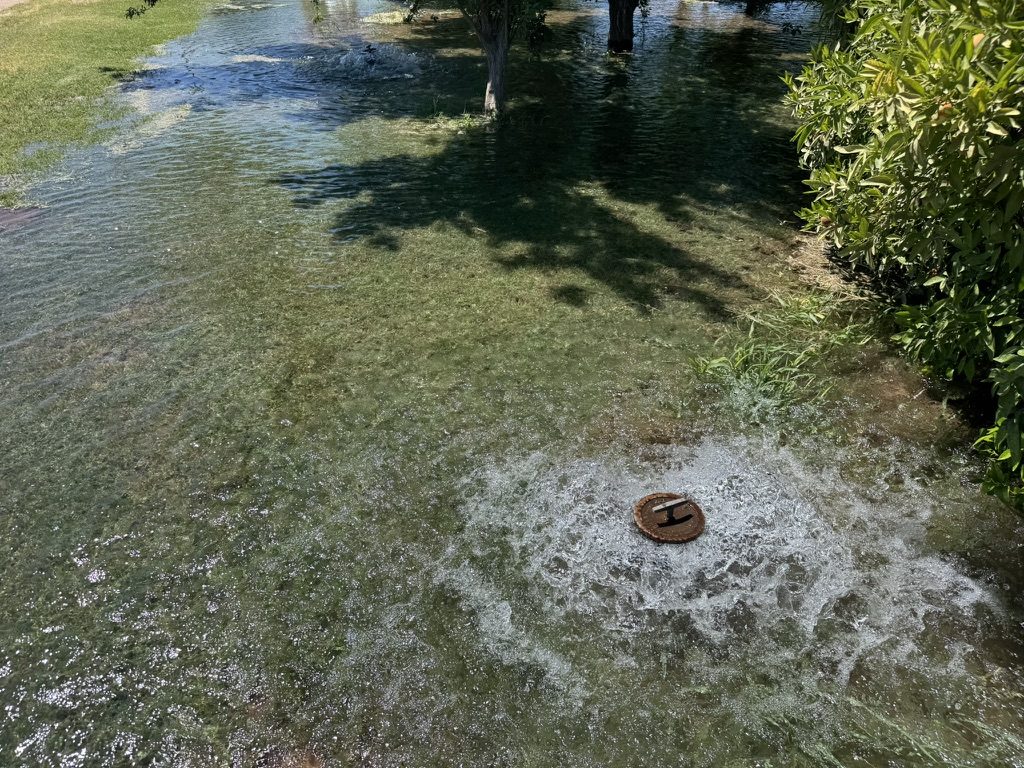
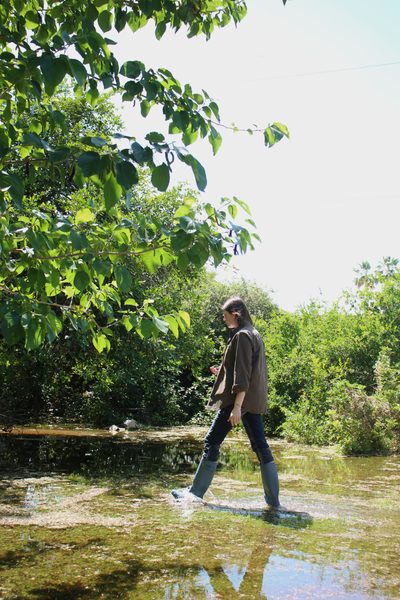
Flood irrigation day on a Phoenix property — water flooding a green lawn beneath mature trees
The Neighborhood

Where it is, and what it's known for.

Like most beloved Phoenix neighborhoods, “North Central” means different things to different people. This guide uses the North Central Phoenix Homeowners Association (NCPHA) boundaries — but you'll hear the name used more broadly, and it's worth knowing the difference before you search.

Schematic map of North Central Phoenix The NCPHA area between 7th Avenue and 7th Street, Missouri Avenue to Northern Avenue, with Central Avenue and the Murphy Bridle Path running down the middle, and the broader North Central corridor extending to 19th Avenue and 16th Street. Northern Ave Missouri Ave CENTRAL AVE · MURPHY BRIDLE PATH NCPHA AREA · 7TH AVE–7TH ST “NORTH CENTRAL” CORRIDOR broader usage (out to 16th St) 19th Ave 7th Ave Central Ave 7th St 16th St N NCPHA area Broader corridor Central Ave / Bridle Path

Schematic, not to scale. Boundaries are informal and debated; irrigation status varies lot by lot and must be verified for any specific property.

The Boundaries

Between the 7's, Missouri to Northern

The NCPHA defines its area as Missouri Avenue to Northern Avenue, and 7th Avenue to 7th Street — roughly 2,500 residential parcels, plus commercial zoning along the 7's. Agents and locals also use a broader “North Central corridor” that stretches out to about 19th Avenue and 16th Street. When a listing says “North Central,” it's worth asking which definition is meant.

The Landmark

The Murphy Bridle Path

A historic tree-lined path running along Central Avenue, named for William J. Murphy and listed on both the Arizona State and National Historic Registers. It's where the neighborhood walks, runs, and rides — a green spine that has defined the corridor for generations.

The Trees

Central Avenue's olive trees

The olive trees lining Central are part of Murphy's original plantings and, like the bridle path beside them, are listed on the State and National Historic Registers. They are the reason North Central reads as one continuous, shaded corridor rather than a grid of separate blocks.

Clearing One Thing Up

Despite the name, there's no mandatory HOA.

Buyers searching “North Central Phoenix HOA” often expect dues and rules. Here's the correction: the North Central Phoenix Homeowners Association is a voluntary, donation-based neighborhood association — not a mandatory HOA. There are no required fees and no CC&Rs attached to a purchase. Membership is optional, and donations support neighborhood efforts like the care of the Murphy Bridle Path. It's one of the reasons the corridor appeals to buyers who want character and community without a rulebook.

Market Snapshot · As of October 2026

North Central market snapshot.

A look at the last twelve months of closed single-family sales inside the North Central corridor — what's selling, for how much, and how often flood irrigation shows up in the data.

100 closed sales

Single-family homes sold in the past 12 months, with closings in every month of the year and a median of 44 days on market.

$1.34M median price

Sales ranged from $562K to over $5.1M, with 16 sales above $2M. Median of $463 per square foot.

~3,000 sqft, built 1960

Median home size and year built — with new custom builds as recent as 2026 mixed in among the originals.

~15,000 sqft lots

Median lot size — about a third of an acre. 81 of the 100 sales were on quarter-acre lots or larger.

The Irrigation Angle

The MLS alone misses irrigated homes.

Just 26 of the 100 sales were marked flood irrigated in the MLS — and at least 5 more described an irrigated lot in the listing text without ever being flagged in the field. Filtering the MLS alone misses irrigated homes, which is why finding them takes a trained eye and parcel-level verification.

Homes with a flood-irrigation signal sold for a median $1.44M versus $1.23M for the rest, and slightly faster. These homes also tend to sit on larger lots — so the premium reflects the land, the canopy, and the water together, not the water alone.

In the Data

26 of 100

sales flagged flood irrigated in the MLS — plus at least 5 more hiding in the listing text.

Median with an irrigation signal: $1.44M · without: $1.23M

Source: ARMLS closed-sale data, single-family homes, 7th Ave–7th St / Northern–Missouri, Oct 2025–Oct 2026. Information deemed reliable but not guaranteed. Medians shown; individual results vary.

Mature trees thriving on a flood irrigated Phoenix property
Living Here

A green spine through the middle of the city.

North Central is central in every sense: minutes from downtown and midtown, strung along the Central Avenue corridor, and shaded the whole way by trees most of Phoenix can't grow no matter what it spends on water. The Murphy Bridle Path is where the neighborhood runs into itself — walkers, runners, and riders under the olives at the edge of some of the most sought-after streets in the city.

The tradeoff is price. This is a premium corridor, and the homes that still have their water and their canopy sit at the top of it. But for a buyer who wants mature trees, real lot size, and history in the ground — in the heart of Phoenix rather than its edges — there are few places like it.

If you're searching here, the question is never just “which house.” It's which lot, which water, and which trees. The MLS won't answer that for you — but reading the parcel will.

North Central Phoenix Central Avenue Corridor Flood Irrigation Historic Canopy
Frequently Asked Questions

North Central Phoenix, answered.

Parts of it are — flood irrigation is a big reason the North Central corridor has the deep canopy it is known for. But it is clustered and parcel-by-parcel, not neighborhood-wide: some streets and lots still receive water and many do not. The MLS often does not flag it correctly, so the irrigation status of any specific property should be verified before you buy.
Despite its name, the North Central Phoenix Homeowners Association (NCPHA) is a voluntary, donation-based neighborhood association — not a mandatory HOA. There are no required dues and no CC&Rs attached to a purchase. Membership is optional, and donations support neighborhood efforts like the care of the Murphy Bridle Path.
The Murphy Bridle Path is a historic tree-lined path running along Central Avenue, named for developer William J. Murphy, who shaped the corridor in the late 1800s. Together with Central Avenue's olive trees, it is listed on both the Arizona State and National Historic Registers and remains one of the defining features of North Central Phoenix.
North Central is a premium Phoenix corridor. Over the twelve months ending October 2026, the median single-family sale inside the 7th Avenue to 7th Street boundaries was about $1.34 million. The flood irrigation itself stays inexpensive to run — what commands the premium is the land, the mature canopy, and the location. For what irrigation actually costs to deliver, see the flood irrigation cost guide.

What flood irrigation actually costs →  ·  What is flood irrigation? →

Next Steps

Thinking about North Central Phoenix?

Whether you're buying, selling, or trying to figure out which lots still have water, start with one of these.

Get the Free Buyer's Guide See Upcoming Workshops Book a Consultation

Camille Fairbanks · GREEN Certified REALTOR® · AZ Flood Irrigation Specialist · eXp Realty · (480) 382-7348

Neighborhood and historic details on this page are drawn from the North Central Phoenix Homeowners Association (NCPHA) and other public records. This page is an independent neighborhood guide; it is not affiliated with or endorsed by the City of Phoenix, SRP, or any neighborhood association. Neighborhood boundaries are informal and debated, and property-specific irrigation status should always be verified individually.