Home / Neighborhoods / Royal Palm
An open, rural-feeling pocket of north Phoenix where the water arrived before the houses did — canal-era irrigation rights that turned Section 31 into orange groves, palomino pasture, and the irrigated lots that remain today.
When the Arizona Canal was completed in 1885, it made agriculture the main occupation of this stretch of desert north of Phoenix. By the late 1880s, water rights had been granted to 200 acres of Section 31 — and that grant is the origin of the irrigated lots you still find in Royal Palm today. Land patents followed in 1891 and 1892, filed by settlers including Thomas Boyle and David Turner.
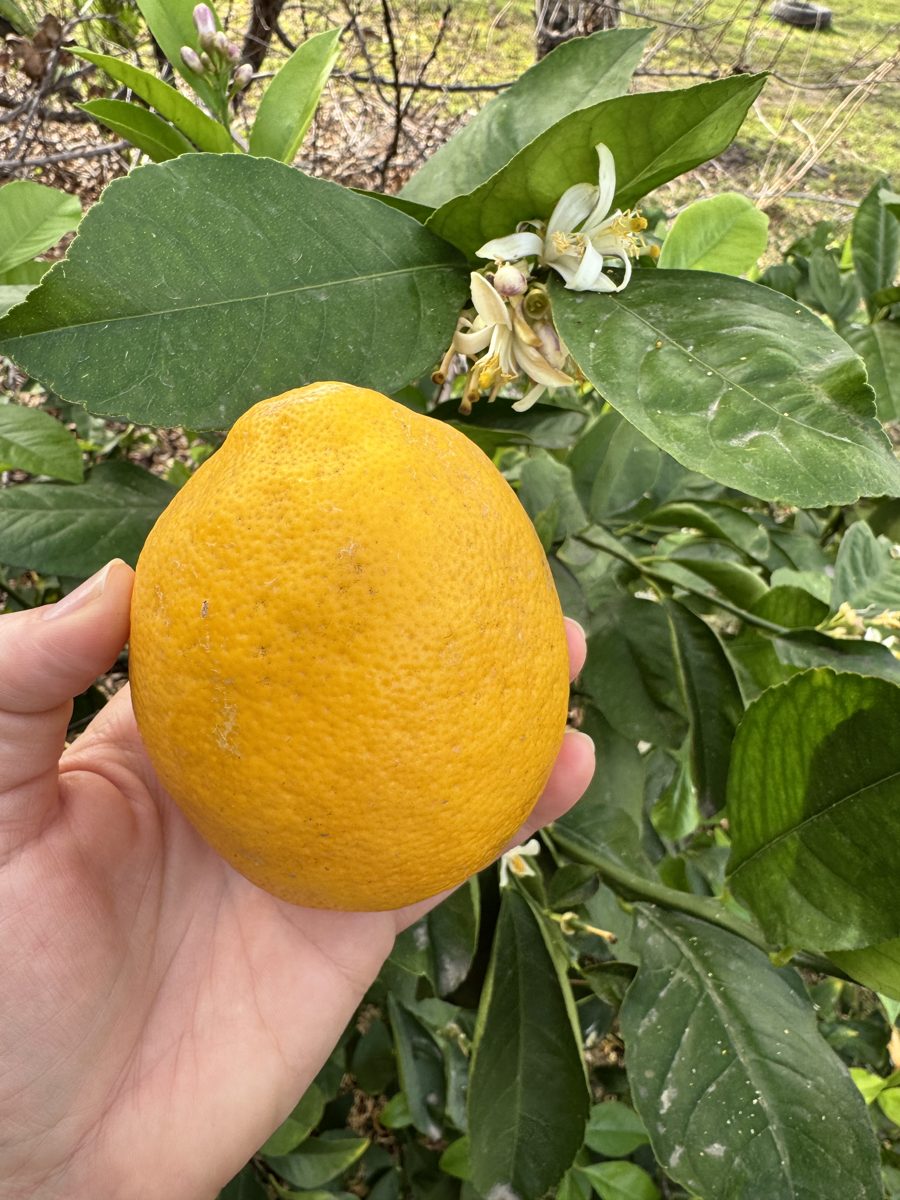
What the water grew, first, was citrus. The Diller family developed the Diller orange — an early-maturing variety classed among the Arizona Sweets — on ground east of 11th Avenue and north of Butler. Ide R. Miller, at 11th Avenue and Dunlap, managed the Arizona Citrus Growers Association. For a time, this was orange country.
It was horse country, too. In the early 1940s, Roy Wayland raised palominos on 80 acres along Northern between 11th and 15th Avenues; his prize stallion, Cream of Wheat, is buried on the property. The Lighting Z Ranch house, on 7th Avenue north of Why Worry Lane, dates to the early 1900s — a reminder of how recently this was open land.
Community photos of Royal Palm go here. None featured yet — submit one (no people, please) and you could be the first.
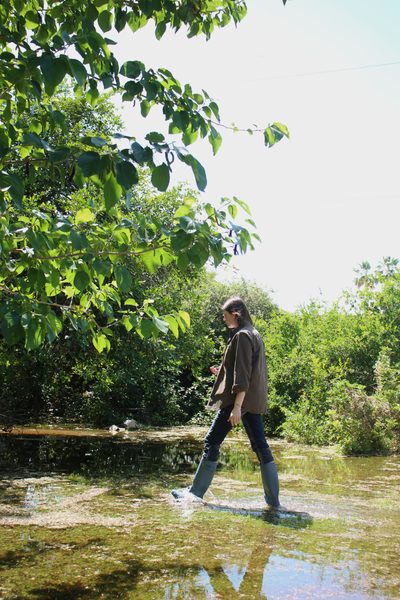
Submit a PhotoThe reason flood irrigation exists in Royal Palm at all is that same 1880s grant. When water rights are tied to the land — appurtenant, in the legal term — they tend to stay with it, which is why a neighborhood platted into dozens of subdivisions can still hold scattered lots that flood the old way, soaking deep into the soil the way the orange groves once drank.
But "canal heritage" is a neighborhood fact, not a property guarantee. Royal Palm is irrigated parcel by parcel: some lots still receive water, many do not, and the account status, delivery infrastructure, and condition of berms and valves vary from address to address. The MLS gets this wrong more often than you would expect. Confirming the water on a specific lot is the work to do before an offer is written, never after.
What to Verify About Water Rights
A large, open area of north Phoenix (zip 85021), bounded by 7th Avenue, 19th Avenue, Northern Avenue, and Dunlap Avenue — with irrigation rights that trace to the Arizona Canal.
Schematic, not to scale. Boundaries are informal; irrigation status varies lot by lot and must be verified for any specific property.
Royal Palm's calling card is the open, rural feeling it has held onto — and the clearest proof of how it keeps it is a park the residents built themselves.
Royal Palm Park began with 29 acres purchased from Joe and Lorraine McCrary. Residents shaped it through neighborhood meetings — the land was contoured, planted, and irrigated by 1976, and a fitness course was dedicated in 1980. It is a park that exists because people showed up for it.
Spread across roughly 47 subdivisions and more than 1,400 households, the area has kept what its community organization calls an "open rural atmosphere" — larger lots, mature trees, and room to breathe inside the city, a rarity this close to central Phoenix.
The Royal Palm Neighborhood Council keeps the neighborhood busy — an annual fall festival, a community yard sale, holiday luminarias, a movie in the park, and a community garden. It is the kind of place where neighbors know one another's names.
A look at the last twelve months of closed single-family sales inside the Royal Palm boundaries — what's selling, for how much, and how often flood irrigation shows up in the data.
Single-family homes sold in the past 12 months, with a median of 50 days on market.
Sales ranged from $350K to $2.7M. Median of $316 per square foot.
Median home size and year built across the area.
Median lot size. 27 of the 49 sales were on quarter-acre lots or larger.
Just 9 of the 49 sales were marked flood irrigated in the MLS — and at least 1 more described an irrigated lot in the listing text without ever being flagged in the field. Filtering the MLS alone misses irrigated homes, which is why finding them takes a trained eye and parcel-level verification.
Homes with a flood-irrigation signal sold for a median $984K versus $665K for the rest. These homes also tend to sit on larger lots — so the premium reflects the land, the canopy, and the water together, not the water alone.
sales flagged flood irrigated in the MLS — plus at least 1 more hiding in the listing text.
Median with an irrigation signal: $984K · without: $665K
Source: ARMLS closed-sale data, single-family homes, 7th–19th Ave / Northern–Dunlap, Nov 2025–Oct 2026. Information deemed reliable but not guaranteed. Medians shown; individual results vary.
Royal Palm offers something that is getting harder to find in Phoenix: space. Larger lots, established trees, a resident-built park, and the open feeling of land that was orchards and pasture within living memory — all a short drive from the center of the city, tucked under the North Mountain preserve.
For a buyer who wants an irrigated lot with room for an orchard or a garden, the canal heritage here is the draw. But the irrigation is scattered, and the listings rarely tell the whole story. Which lot still has water, and which only used to, is exactly the question worth answering before you fall for a house.
If you're searching here, read the parcel, not just the MLS field. And if you own an irrigated lot in Royal Palm and are thinking about selling, that water and those trees are part of what the right buyer is paying for — they deserve to be told about properly.
What flood irrigation actually costs → · What is flood irrigation? →
Historic and neighborhood details on this page are drawn from the Royal Palm neighborhood association's published history and other public records. This page is an independent neighborhood guide; it is not affiliated with or endorsed by the City of Phoenix, SRP, or any neighborhood association. Neighborhood boundaries are informal, and property-specific irrigation status should always be verified individually.