How the water gets from mountain snowmelt to your backyard — the valve, the schedule, and the Zanjero.
Flood irrigation floods your entire property with 2–3 inches of water on a regular schedule and lets it soak deep into the soil. Instead of spraying the surface like a sprinkler, it saturates the ground — sending moisture down to where roots grow strong.
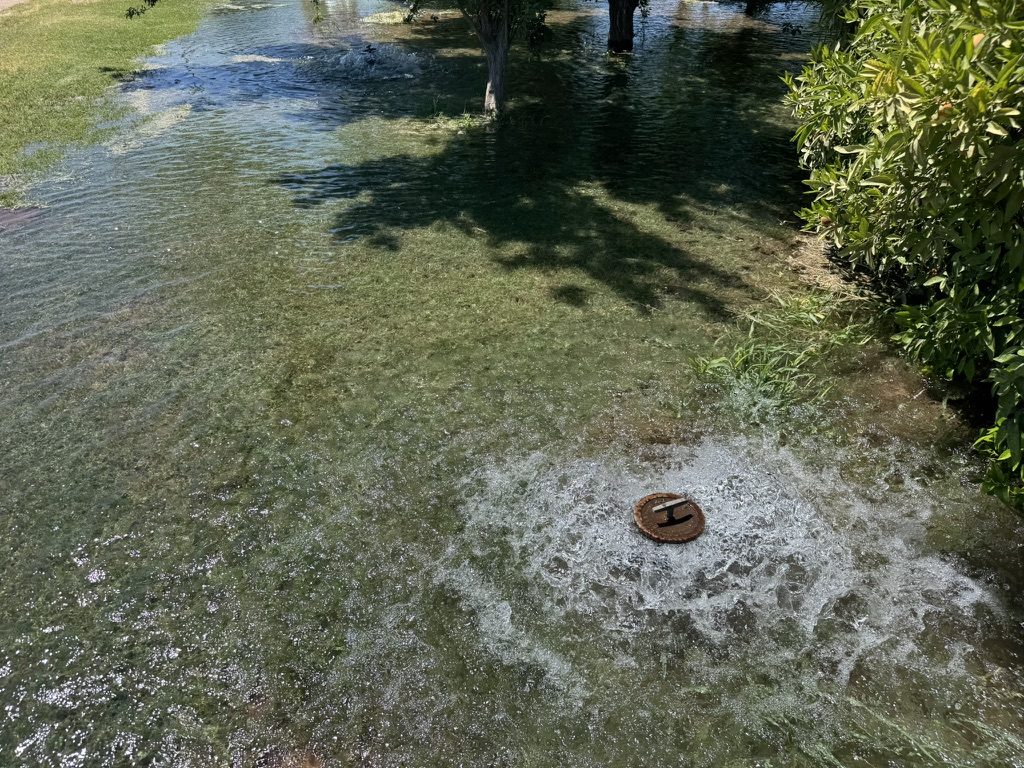
In the Greater Phoenix Valley, the water is delivered by SRP through a system of canals and laterals that has been running for over 100 years. It arrives by gravity: when it is your turn, you open a valve and the water flows onto your land, filling it behind low dirt berms until it soaks in over a few hours.
It is one of the oldest irrigation methods in Arizona, and for growing trees it is still one of the best. It is also astonishingly affordable — typically $75 to $200 per year.
The system serving the Valley moves water hundreds of miles by gravity — a feat of century-old engineering that still runs today.
Water begins as snow in Arizona's high country, melting into the Salt and Verde Rivers — not the Colorado River.
The rivers fill a chain of SRP-managed reservoirs, which store the water and release it into 131 miles of main canals and roughly 1,000 miles of laterals.
On your delivery day, an SRP Zanjero opens the gate at the top of your neighborhood's system and water flows by gravity toward your street.
You open your valve, the water fills your land 2–3 inches deep behind the berms, and it soaks in within a few hours — feeding roots for weeks.
April through September, water arrives roughly every 14 days, delivered around the clock — including holidays.
October through March, deliveries slow to about every 28 days, matching the reduced needs of dormant and semi-dormant trees.
Canals close for maintenance once a year, usually January–February — aligning almost perfectly with tree dormancy in Zone 9b.
Roughly $75–$200 a year — and why it's billed annually, not monthly.
Read the guide →
What appurtenant water rights mean and exactly what to verify before you buy.
Read the guide →
The real environmental tradeoffs — groundwater recharge, shade canopy, and growing food locally.
Read the guide →